Concern about Research Ireland’s Strategy and Programme Plan

Sufficiently concerned about the proposed Research Ireland/Taighde Éireann Strategy 2026–2030, announced in March this year, I signed the Open Letter to the Minister as part of a broad coalition of individuals and organisations deeply concerned about the future of research in Ireland. I will continue to advocate for a pause to the devolution of the 2026 Government of Ireland Postgraduate and Postdoctoral Awards to allow for a full review and a meaningful, structured, and inclusive sectoral engagement with the Irish research community. The open letter to the Minister went as follows:

Dear Minister for Further and Higher Education James Lawless,

We, the undersigned, are writing to express deep concern about the priorities within Taighde Éireann – Research Ireland’s recently published 2026-2030 strategy and programme plan that will guide the distribution of over €4.55 billion in public funds over the next five years. The new strategy is structurally, rhetorically and materially focused on commercially translatable research and economic impact rather than supporting bedrock, fundamental, discovery research and research for the public good. The disproportionate focus on industry interests instead of discovery research and the public interest marginalises the Arts, Humanities and Social Sciences (AHSS) and the fundamental sciences, and minimises research for social good and research that is truly innovative and ground-breaking.

Despite a 2023 letter signed by over 2,500 scientists calling for balance between STEM (Science, Technology, Engineering and Mathematics) and AHSS (Arts, Humanities, Social Science) in Ireland’s research funding, which was sent to then Minister Simon Harris, this new strategy is an assault on Ireland’s research ecosystem. The imbalance in funding weakens academic freedom, and its strong private-sector bias is a threat to democratic processes.

We are particularly concerned about:

(1) The lack of a participatory process and the absence of evidence-based decision-making in developing the strategy. Research Ireland failed to engage in a meaningful way with a broad range of key constituents within Ireland’s research community in developing and refining the new strategy. While there were events characterised as consultation, it is clear that Research Ireland has not heard or listened to the voices of active researchers across the disciplines they are legally required to serve. The strategy also ignores all the international evidence that shows a balanced research funding ecosystem is vital to produce the best fundamental and translational (applied) research. The lack of a truly participatory process is not only an attack on academic freedom, but it is an attack on democracy itself.

(2) The industry-centred, commercially-focused, profit-seeking priorities of the research strategy marginalises Arts, Humanities and Social Science (AHSS) and fundamental science and minimises the value of curiosity-driven research. Addressing societal challenges and making fundamental scientific breakthroughs requires both translational (applied) research and discovery research.

(3) The dismantling of the current PhD scholarship and post-doctoral fellowship programmes. The proposed restructuring requiring higher education institutions to distribute PhD scholarship and post-doctoral fellowship funds internally has multiple negative effects: (a) It undermines the notion of funding excellence in ideas and people regardless of discipline or institution by concentrating awards into institutional priorities. Concentrating research in areas deemed strategically important will have an effect of stifling innovation in the long term; (b) It undermines truly independent, impartial, international, fair and comparable review across all institutions by placing the review process in institutional hands. Given the institutionally-based allocation of funds on past performance, it will exacerbate and reinforce disparities within and among institutions. Moreover, the translational aspect will further marginalise AHSS and fundamental scientific research; (c) Removing the prestigious centralised scholarships/fellowships removes the external signal of excellence and reputation that attracts high-calibre researchers. This essentially dismantles the excellent programmes that were offered by the Irish Research Council and weakens Ireland’s research capacity. During the pre-legislative scrutiny and legislative processes, the research community and Government were explicitly told this would not happen.

We ask the Minister for Further and Higher Education to urgently intervene and reclaim the public-good mission of Ireland’s research agency. We call on Research Ireland to:

(i) Reverse the decision to dismantle the centralised national model of funding for PhD scholarships and post-doc fellowships;

(ii) Recommit to curiosity-driven, principal-investigator-led research instead of prioritising industry-led research. Ireland’s research ecosystem must include support for fundamental inquiry across all disciplines, not as a gesture, but as a structural priority.

(iii) Remove the requirement that non-applied research must demonstrate its future economic utility to qualify for funding.

(iv) Establish an Irish Research Council as a subcommittee of the Board of Research Ireland as promised during the development of the legislation and provided for in Section 19(2)(b) of the Research and Innovation Act 2024.

(v) Prioritise research for the public good. Ireland faces profound societal challenges that commercialised, profit-oriented research cannot address. During this time of societal upheaval, it is irresponsible to promote profit-oriented research that can add to destructive social and environmental processes, while undermining research that helps to understand the challenges facing Irish society. Research on economic inequities, democratic participation, mental health, housing injustices, climate justice, education, and the full range of human experiences and societal processes must be valued on its own terms, not subordinated to industry-led agendas or quantified through economic metrics.

(vi) Include social scientists, non-commercially-oriented researchers, as well as senior leadership of Irish higher education institutions, in all future strategy development and in the governance of Research Ireland. The current strategy must be reopened for genuine co-design with Ireland’s research community, including those whose disciplines are most marginalised by its current framing. Open discussion must be respected without fear of retaliation or retribution. Critical voices must be welcomed and protected in line with the principles of academic freedom. Participatory co-design must be embedded in future strategy cycles as a non-negotiable requirement.

(vii) Establish a Social Sciences, Humanities and Community Research Fund with ring-fenced, recurring investment. This fund should be governed with active input from discipline representatives and civil society, and explicitly designed to support research that may not produce a commercial output but will enrich Irish public life, policy, and democratic culture.

(viii) Demonstrate that evidence-based and participatory policy is embedded in Research Ireland’s own governance. Research Ireland must include and give equal weight to input from scholars across all domains into its strategic decision-making. As a public body and steward of public funds, Research Ireland must publish clear and transparent accounts of how its strategic decisions are made, what evidence is used, whose voices are included, and how conflicts of interest with corporate and enterprise partners are managed. Research Ireland must openly acknowledge the societal risks of harmful corporate interference in research and must prevent corporate capture of Ireland’s public research ecosystem.

Climate Anxiety Among Higher Education Students at the University of Galway

As evidence of climate change becomes more apparent and the need to act becomes more urgent (IPCC, 2023), a sense of helplessness and powerlessness now filters through many sectors of society. Daily, the news brings new images and headlines about climate-related disasters — devastating storms and floods, disappearing lakes and rising sea levels, melting glaciers, and disappearing biodiversity. With the paralysis and procrastination of world leaders (and worse, outright denial) to act in the face of such urgency, it is no surprise that many are growing increasingly alarmed about the threat to humanity and the perilous state of our planet. Climate anxiety, also known as eco-anxiety, is the distress and fear related to the impacts of climate change on the environment and on future generations. Climate change is a real threat, so it’s normal to feel worried and concerned about its consequences. But worry is not the same thing as anxiety. Many people are worried about climate change, and that’s a good and healthy thing because worry as an emotion is a motivator. If you worry about something, you are motivated to better understand and act to mitigate that worry. Where worry becomes a problem is when it becomes overwhelming and debilitating, when it keeps you from living your life to its full potential. Climate anxiety can have some significant impacts in terms of a person’s mental well-being (Majeed and Lee, 2017; Charlson et al., 2022), and it can also lead to symptoms such as panic attacks, loss of appetite, irritability, weakness and sleeplessness (Swim et al., 2010).

Social scientists have contributed to a crucial body of work on how people cope with and psychologically adapt to climate change. Research findings show that climate change anxiety has two distinct effects on individuals: it directly encourages pro-environmental behaviours in some and, indirectly, may have detrimental effects on such action, such as eco-paralysis (Innocenti et al., 2023). A review of 94 studies focused on climate anxiety, involving 170,000 people across 27 countries, explored who it is most likely to affect and what its possible consequences could be (Kühner, 2025). It found that those who are more likely to experience climate anxiety include women, young adults, people with left-wing views, and those expressing concerns about nature or their future. Climate anxiety is increasing among students in higher education and among young people more broadly (Ramadan, 2023). In a study mapping higher education students’ climate anxiety across sustainability-related study fields, results place climate anxiety within a range of emotions, from sadness to hope (Khalaim and Budziszewska, 2024). Most respondents reported a mixture of empowering and paralysing emotional states, but also advised academia to rethink its time economies, prioritise transformative climate action, acknowledge students’ emotional work around sustainability issues, make climate education more humanistic, and include more-than-human-nature in educational spaces.

To better recognise and understand the local specificities of climate anxiety and its current levels in higher education, this research sought to capture how students, undertaking two sustainability-related modules at the University of Galway, feel about climate change, when their worry or anxiety spikes and what coping mechanisms they use when they experience such concerns. Although not extensive in nature and using a convenience sampling method, responses from 109 first-year and final-year undergraduate students were recieved and analysed. The student responses to these three questions are presented here in graphical form:

Figure 1
Figure 2
Figure 3

When asked whether they felt anxious about climate change, over 96% reported some level of anxiety, with the majority (70.6%) feeling anxious some of the time (Figure 1). Less than 4% reported no anxiety about climate change. When asked to indicate when such anxiety spiked, a wide range of triggers were suggested (Figure 2). The highest response (21.1%) was when students thought about their future, followed by extreme weather events and hearing about species extinction. In terms of what helps them alleviate worry and anxiety about climate change, the biggest response was ‘being more sustainable in their own lives’ (44%), followed by ‘distracting themselves with humour or entertainment’ (Figure 3).

Researchers are increasingly trying to better understand both the emotions we experience in response to ecological crises such as climate change and how these emotions may be harmful or beneficial to our overall well-being. As indicated earlier and found in this study, climate activism and personal pro-environmental behavioural change can be positive outcomes of genuine apprehension and anxiety over climate change. But the role of educators is crucial in providing the space and time to discuss students’ concerns and real fears, while also equipping them with the tools and know-how to develop tangible, transformative climate action strategies in their personal lives and in the wider community. There is also an urgent need to communicate effective coping strategies for climate anxiety to environmental practitioners, university students, and educators (Daeninck et al., 2023). Greta Thunberg’s climate activism, which was borne out of her depression and urge to make a difference in the world, is an example of the positive outcomes climate anxiety can have (Borter, 2019).

References

  • American Psychological Association (APA). (2010). Psychology and Global Climate Change: Addressing a Multi-faceted Phenomenon and Set of Challenges. APA, [available at https://www.apa.org/science/about/publications/climate-change.pdf].
  • Borter, G. (2019). Rising seas and stress levels spawn climate anxiety support groups. Reuters. Available at: https://www.reuters.com/article/us-climate-change-eco-anxiety-idUSKBN1X21P2.
  • Charlson, F., Ali, S., Augustinavicius, J., Benmarhnia, T., Birch, S., Clayton, S., Fielding, K., Jones, L., Juma, D., Snider, L. and Ugo, V. (2022). Global priorities for climate change and mental health research. Environment International, 158, p.106984.
  • Daeninck, C., Kioupi, V. and Vercammen, A. (2023). Climate anxiety, coping strategies and planning for the future in environmental degree students in the UK. Frontiers in Psychology, 14, p.1126031.
  • Khalaim, O. and Budziszewska, M. (2024). “It should not only be technical education.” Students’ climate anxiety experiences and expectations toward university education in three European universities. The Journal of Environmental Education, 55(4), pp.308-323.
  • Kühner, C., Gemmecke, C., Hüffmeier, J. and Zacher, H. (2025). Climate change anxiety: A meta-analysis. Global Environmental Change, 93, p.103015.
  • IPCC. (2023). Climate Change 2023: Synthesis Report, Summary for Policymakers. Contribution of Working Groups I, II and III to the Sixth Assessment Report of the Intergovernmental Panel on Climate Change. IPCC, Geneva, Switzerland
  • Innocenti, M., Santarelli, G., Lombardi, G.S., Ciabini, L., Zjalic, D., Di Russo, M. and Cadeddu, C. (2023). How can climate change anxiety induce both pro-environmental behaviours and eco-paralysis? The mediating role of general self-efficacy. International Journal of Environmental Research and Public Health, 20(4), p.3085 https://www.mdpi.com/1660-4601/20/4/3085
  • Majeed, H. and Lee, J. (2017). The impact of climate change on youth depression and mental health. The Lancet Planetary Health, 1(3), pp.e94-e95.
  • Ramadan, R., Randell, A., Lavoie, S., Gao, C.X., Manrique, P.C., Anderson, R., McDowell, C. and Zbukvic, I. (2023). Empirical evidence for climate concerns, negative emotions and climate‐related mental ill‐health in young people: A scoping review. Early Intervention in Psychiatry, 17(6), pp. 537-563.
  • Swim, J., Clayton, S., Doherty, T., Gifford, R., Howard, G., Reser, J., Stern, P. and Weber, E. (2010). Psychology and global climate change: Addressing a multi-faceted phenomenon and set of challenges. A report by the American Psychological Association’s task force on the interface between psychology and global climate change. American Psychological Association, Washington, 66, pp.241-250.

Visit of Douglas College, Vancouver, Canada

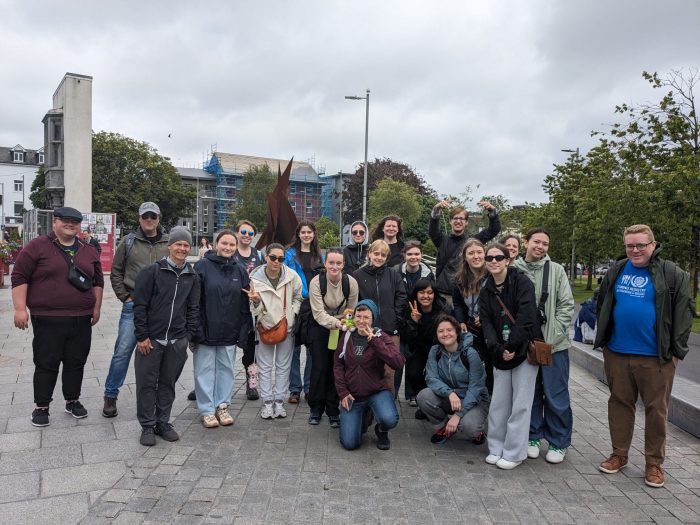
As part of the School of Political Science & Sociology at the University of Galway’s ongoing commitment to collegiality, cooperation, and community, Mike hosted a group of academics and undergraduate students from Douglas College, Vancouver, British Columbia, Canada – under the leadership of Dr Joey Moore from the Sociology and Anthropology Department – on Wednesday the 13th of June 2024. Mike provided a walking presentation and tour of Galway discussing the historical, political, and socioeconomic development of the city over the recent past. The focus for many of the undergraduate students was on urban planning and development, and they hoped to bring their learnings and understanding of what Galway is doing well and what Galway needs to improve upon and change back to British Columbia in terms of active and sustainable travel, placemaking, liveability, and improved quality of life.

Dr Joey Moore and students from Douglas College in Eyre Square

B.Sc. (Social Sciences) Placement/Internship Work on Digital StoryMaps brings Galway’s Heritage to Life

Mike is the Programme Director for the B.Sc. (Social Sciences) programme and a crucial element of this degree is a semester-long work placement/internship, undertaken by third-year students in their second semester. The programme, in close cooperation with Emma Marron in the Careers Development Office, has worked tirelessly over the past number of years to link with local, regional, and national organisations, institutions, NGOs, businesses, and industry to provide essential opportunities for students to develop their employability skills and obtain real-world experience of work within these organisations and companies. One exemplary organisation that the programme has worked closely with over the past few years has been Galway County Council.

This year, B.Sc. (Social Sciences) student Natalie Cyrkel worked with the Heritage and GIS teams of Galway County Council to convert historical data from sources, including O’Donovan’s Ordnance Survey Letters, Griffiths Valuation, the Down Survey, and the 1901 and 1911 censuses, into digital formats. Spearheaded by Galway County Council in conjunction with Galway County Heritage Forum, The Heritage Council, and local community and heritage groups, ‘Galway County Heritage Trails’ showcases the cultural and historical significance of almost half of County Galway’s 4,556 townlands through meticulous research and the application of cutting-edge technologies.

Natalie, with fellow University of Galway students Dylan Reilly and Joseph Ennis, worked on one of the standout features of the project, the creation of StoryMaps, a series of interactive maps combining geographical data with multimedia elements to guide users through the historical landscapes of County Galway’s townlands, towns and villages. One hundred sixty-one townlands in the civil parishes of Kiltartan, Kinvaradooras, Kilcolgan, Kilthomas, and Killinny were digitised. At the same time, online StoryMaps have also been created for Oranmore, Mountbellew, Monivea, and Ballyglunin, bringing to 2,000 the number of townlands now digitised through the project.

At the official launch of StoryMaps at Galway Co Co, attended by Cllr Liam Carroll, Cathaoirleach of the County of Galway, Liam Hanrahan, Director of Services, Director of Services for Economic Development & Planning, Marc Mellotte, Head of Engagement at the University of Galway, members of the Heritage Council and local community and heritage groups, Marie Mannion, Heritage Officer with Galway County Council, stated:

in addition to the academic aspect of the project, there is a strong emphasis on community engagement. Galway County Council and the students have worked closely with local heritage and community groups to collect and present local heritage information that enriches the content of the StoryMaps. This collaborative approach ensures that the digital heritage trails reflect the authentic voices and experiences of the community.


For some media coverage see The Irish Examiner (USA), Irish Heritage News, Galway Bay FM, Irish Central, Tech Buzz Ireland and Tech Central. To view the StoryMaps and Townland research, visit The Galway Co Co Maps Page.

GovERN Research Community Workshop

Dr Mike Hynes of the Governance and Sustainable Development Research Cluster in the School of Political Science & Sociology at the University of Galway led a hybrid workshop of the GovERN research community at the L’institut national de recherche pour l’agriculture, l’alimentation et l’environnement (INRAE) in Nouvelle-Aquitaine Bordeaux, France on Wednesday 18th October 2023. This workshop preceded a public conference organised by the GovERN the previous day titled The Natured-based Solutions We Want: Shifting Perspectives on Rural and Peri-urban Nature-based Solutions attended by academics, practitioners, government agencies, and civic organisations from across Europe and Canada. GovERN is an international research community that seeks to advance collaborative research on social challenges and emancipatory opportunities when governing rural and peri-urban Nature-based Solutions. Members of the collective represent academic, government, and civic organisations and institutions in France, the UK, Finland, Spain, Italy, Canada and Ireland and are actively engaged in collaborative research and writing, teaching, and research funding applications and opportunities.

Dr Mike Hynes leading the workshop and discussions on the application and implementation of Nature-based Solutions for the GovERN Research Community